
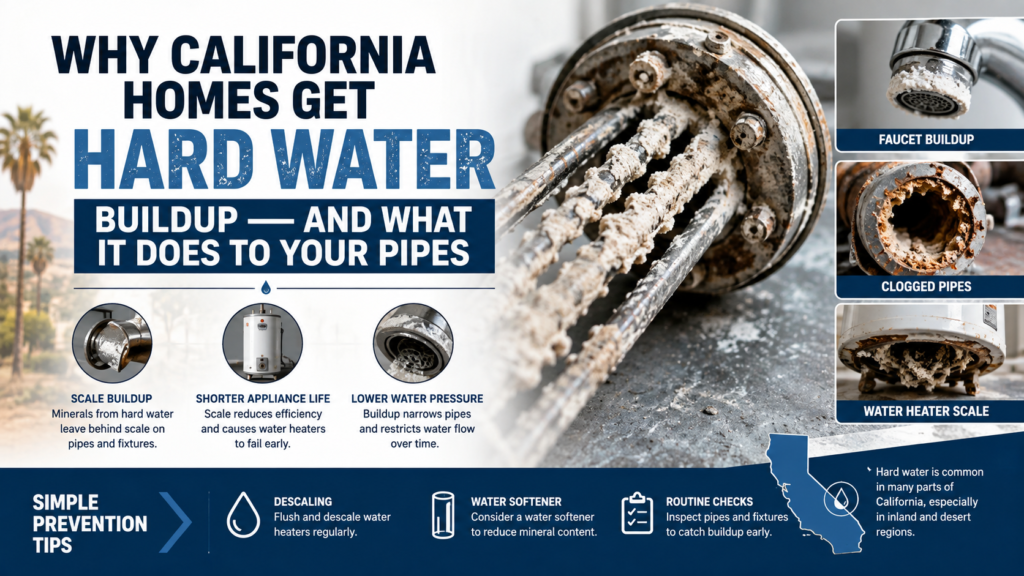
If you have ever pulled a glass out of the dishwasher and noticed a cloudy film that will not rub off, you have already met hard water California homeowners deal with every day. It is not dirt. It is not a broken dishwasher either, though plenty of people assume that at first. It is mineral content, mostly calcium and magnesium, that rides along in the water supply and leaves a little bit of itself behind on every surface it touches.
California is a big state, and water quality is not the same everywhere. Coastal cities tend to get a milder blend. Inland Southern California, the Central Valley, and the high desert communities generally deal with something harder, sometimes noticeably so. That is not a guess. It lines up with how groundwater and imported supply blends work in those regions, and it is part of why plumbing issues look a little different depending on where in the state you live.
What Hard Water Actually Does Over Time
Hard water on its own will not hurt you. People drink it, cook with it, shower in it, every day, without any real health concern. The trouble shows up slowly, in the plumbing itself, and that is the part homeowners tend to underestimate.
Every time hot water passes through a pipe or sits in a tank, some of those minerals settle out. Over months and years, this builds into a scale layer. Inside a water heater, that scale sits right on the heating element or along the tank walls, and it acts like insulation, just not the kind you want. The heater has to work harder to reach the same temperature. Energy bills creep up. Eventually, the unit fails earlier than it should have.
This is the honest answer to a question a lot of homeowners search for, usually in frustration, after replacing a water heater that barely made it past five years. Water heater scale buildup is one of the most common reasons behind early failure, and it is largely preventable, or at least manageable, if you catch it early enough.
Pipes are not immune either. Scale narrows the inside diameter bit by bit. It will not happen overnight, and honestly, most people do not notice until the effect is already fairly advanced. Then one day the shower pressure feels weak, or a faucet takes longer to get warm, and the cause traces right back to years of mineral buildup nobody was watching.
The Signs Worth Paying Attention To
A few symptoms tend to show up together, and recognizing them early can save a homeowner from a bigger repair bill later.
White or chalky residue around faucet heads and shower nozzles is usually the first visible clue. It looks a bit like dried salt, and scrubbing it off works for a while, until it comes right back.
Reduced water pressure is another one, though it gets blamed on other things first, sometimes the water company, sometimes the plumbing age of the house. Sediment and scale narrowing the inside of pipes is a quieter, less obvious cause, and it is worth ruling out before assuming something more expensive is wrong.
Spotting on dishes and glassware, even right out of a clean cycle, is a fairly reliable sign too. So is soap that will not lather properly. Hard water reacts with soap in a way that leaves a filmy residue instead of a clean rinse, which is part of why skin can feel dry or slightly itchy after a shower in areas with harder supply.
And then there is the water heater itself. A tank that is making popping or rumbling sounds during heating cycles is very likely dealing with scale sitting at the bottom, and that sound is minerals shifting around as the water heats through them.
What Can Actually Be Done About It
None of this means a homeowner is stuck. There are a few practical steps, some free, some requiring a modest investment, that help slow the buildup down.
Flushing a water heater once a year is the simplest one, and it is often skipped simply because people do not know it is something they are supposed to do. Draining a portion of the tank clears out loose sediment before it hardens into scale. In areas with notably hard water, twice a year is not unreasonable.
Descaling fixtures with a simple vinegar soak works surprisingly well for faucet aerators and showerheads. It is not a permanent fix, since the water causing the buildup is still the same water, but it keeps things running better between deeper maintenance.
A water softener is the more permanent answer, and for homes in the harder water regions of the state, dealing with hard water California utilities cannot fully soften on their own, it tends to pay for itself over time through less strain on appliances and fewer early replacements. It is not a requirement, and plenty of households get by without one, but for anyone tired of replacing water heaters early or scrubbing the same faucet every week, it is worth looking into.
None of these steps require professional help every time, though there comes a point, usually when pressure has dropped noticeably or a water heater starts making that popping sound, where having a plumber take a look makes sense. Catching water heater scale buildup early is a lot less expensive than waiting for a full system failure.
Getting Help When You Need It
If you are noticing any of these signs in your own home, it is worth getting a second opinion before the problem gets more expensive to fix. MR.PlumberCalifornia connects homeowners across the state with independent local plumbing providers who deal with hard water issues regularly, from water heater flushing to full fixture replacement.
Coverage spans a wide range of California cities, including higher hard water areas like Sacramento, Fresno, and Bakersfield. You can browse the full list of areas served on the Locations page to see what is available near you.
Getting connected does not require an account or a long form. A quick call is usually enough to find out what is covered in your area and get matched with an independent provider who can take a closer look at your water heater or plumbing setup.